Verdict: YES · 1937
Their Eyes Were Watching God: the frame gets richer every time
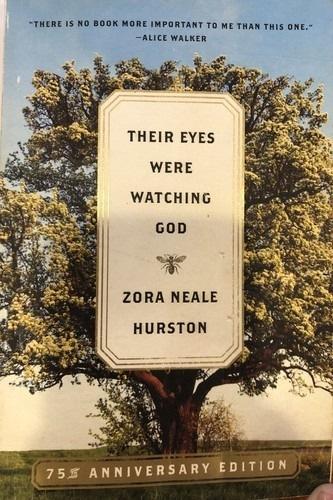
YES. Hurston's novel is a story told on a porch to a friend, and once you know how the telling ends, every sentence of it sounds like testimony rather than suspense.
What worked on the first read
The first time through, the pull is voice. Not one voice but two: a narrator whose sentences reach for scripture and folklore, and the talk of Eatonville, set down in dialect so exact that the porch sitters seem to argue inside your ear. The opening line sets the terms at once: "Ships at a distance have every man's wish on board." It is a proverb that turns, within a paragraph, into a statement about women, memory and who gets to decide what a life meant.
Then there is the plot, which is simpler than its reputation suggests. Janie Crawford comes back to town alone, the neighbours talk, and she sits down with her friend Pheoby to explain. Three marriages follow, each one a different answer to the question of what she wants. On a first read you are mostly following Janie forward, waiting to see which man will finally deserve her, and that is a perfectly good reason to keep going. The book is short, the scenes are vivid, and the chapters on the Florida muck move with a physical energy the earlier sections hold back.
What holds up on a second read
Nearly everything, and much of it gets better. The frame, which feels like a convenience the first time, becomes the whole point on a return. Janie is not a heroine being tested by events. She is a woman who has already come through them and is choosing how to tell it. Knowing that changes the texture of every chapter. The tone is not anxious but deliberate, and the narrator's lyric passages read as Janie's own hindsight leaking into the prose.
The blossoming pear tree of the early chapters, which can pass for a pretty interlude, turns out to be the measuring stick for everything that follows. On a second pass you watch each marriage get held up against that image and come up short, or not. Logan Killicks's sixty acres, Joe Starks's store, his mayoralty, his new street lamp for the town: the book is quietly cataloguing what men offer in place of what Janie actually asked for.
The Joe Starks years, in particular, gain weight. The first time, they read as the long middle you push through to reach Tea Cake. The second time, they are the novel's most exacting study of silence: two decades of a woman kept behind a counter, with the head-rag she is made to wear as the visible sign of it. The mule episode, which seems like comic relief, is plainly about her, and the porch talkers half know it.
What does not entirely hold up is the pacing of the final third, which compresses a great deal into very few pages. But that compression reads less like a flaw once you understand that Janie is the one choosing where to linger.
The moment test
The hurricane chapter. On first read it is pure event: the lake rising, the flight across flooded country, the dog in the water, the bite. It is the most suspenseful stretch Hurston wrote, and it gives the novel its title in a single sentence about people in a shack waiting out the storm, "their eyes were watching God."
On a second read, you know what the bite means. You know Tea Cake will sicken, that Janie will have to shoot him, and that she will stand trial before a white jury while the Black workers she lived alongside turn against her. That knowledge does not drain the chapter. It slows it down. You notice how much of the storm is about waiting: people holding still to see what a larger power will do with them, which is exactly what the courtroom will ask of Janie a few pages later. The scene gets heavier, not flatter. Suspense gives way to dread, and dread turns out to be the deeper register.
It changes how the ending lands, too. When Janie closes her story for Pheoby, a first-time reader is still recovering from the trial. On a second pass, those last pages feel like the reason the book was told at all: not the verdict of a jury, but the verdict of the woman who lived it.
The shelf verdict
Keep. This is a book that changes with its reader. Read it at twenty and it is a love story with a tragic turn. Read it again at forty and it is about the long cost of being spoken for, and the small, hard-won right to speak back. The dialect that slows a first read becomes music on the second, once the ear has adjusted, and the narrator's images stop sounding ornamental and start sounding earned.
There is comfort here too, the kind that renews rather than dulls. Returning to the porch, to Pheoby's patient listening and Janie's long exhale of a story, feels less like revisiting a plot than like sitting down again with someone who has more to say than she told you last time.
YES. Return every few years, and expect the Joe Starks chapters to have grown while you were away.