Verdict: YES · 1929
The Sound and the Fury: a novel that teaches you to reread it
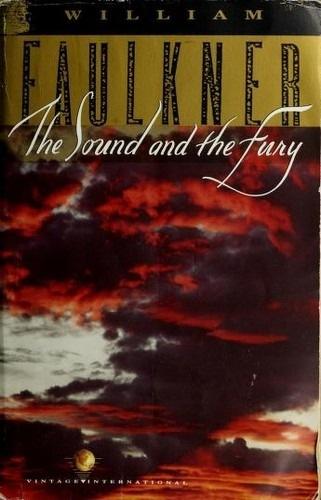
YES. The Sound and the Fury is one of the few novels that is barely readable once and fully readable twice, and the second read is where it becomes great.
What worked on the first read
Honestly, very little worked in the ordinary sense. The pull of a first read is stubbornness. The book opens inside the mind of Benjy Compson, a thirty-three-year-old man with a severe mental disability who cannot speak and does not experience time as a sequence. "Through the fence, between the curling flower spaces, I could see them hitting." He is watching golfers on land his family once owned, and when one of them calls for his caddie, Benjy hears the name of his sister, Caddy, and starts to howl. On first read you do not know any of that. You know only that someone is upset by a word.
The section jumps without warning between 1928 and scenes from childhood decades earlier, signalled sometimes by a shift into italics and sometimes by nothing at all. Two characters share the name Quentin. Two share the name Jason. The servants who look after Benjy change across the years, and the reader is expected to sort them out by context. Most people go back to the beginning at least once before they reach page forty.
What keeps you going is the feeling that the confusion is deliberate and the pieces are real. Something happened to Caddy. Everyone in the family is organised around her absence. By the time you reach the second section, narrated by her brother Quentin on a single day at Harvard in June 1910, you can tell the book is circling the same losses from different angles, and you want to see them whole.
What holds up on a second read
Everything, and the order of the sections starts to make sense as an argument. Benjy's section is pure sensation without interpretation. Quentin's is interpretation without control, an educated mind drowning in memory and in his own sentences, which lose their punctuation as the day goes on. Jason's section, set on Good Friday 1928, is the easiest to read and the ugliest. Its first line is a sneer at his niece, and his tone never improves. He is funny, petty, and entirely clear, and the clarity is the point. The most lucid narrator is the one with the least to offer.
The fourth section finally steps outside the family and follows Dilsey, the Black servant who has held the household together, through Easter Sunday. After three closed minds, the third-person narration feels like opening a window.
On a second pass the Benjy section turns from a puzzle into the best part of the book. You know who Caddy is, what the muddy drawers in the pear tree mean, why the smell of trees matters, and why the family changed his name. Every fragment is a scene you now recognise, and because Benjy cannot judge any of it, the scenes arrive without the excuses the other brothers make. He is the only Compson who simply loved his sister.
The prose has stamina because it was built to be reassembled. Faulkner later wrote an appendix tracing the family's history for an anthology of his work, and many editions print it. It is useful, but the book is better without it on a reread: once you have done the assembling yourself, the novel belongs to you in a way a summary cannot give.
The moment test
Easter Sunday, the service at the Black church, where a visiting preacher who looks unimpressive in the pulpit begins in a formal voice and then shifts into something closer to song. Dilsey sits with Benjy and weeps. On the walk home she says, "I seed de beginnin, en now I sees de endin."
On first read this is a relief and a little opaque. It sounds like religious feeling, and it is. On a second read it lands as the only clear-eyed verdict anyone in the novel gives on the Compsons. Dilsey has been there across every year the first three sections scrambled. She is the one character who can hold the family's whole timeline in her head at once, which is exactly what the reader has been struggling to do. Knowing what is coming makes the line heavier, not lighter.
The final pages follow Benjy's carriage ride into town. Luster, the boy minding him, drives around the square on the wrong side of the Confederate monument, and Benjy, who needs the world to stay in its usual order, begins to bellow. Jason strikes Luster and turns the carriage around, and Benjy goes quiet as the familiar sights pass in their familiar order. On a first read it is an odd, abrupt ending. On a second, after Quentin's death and Jason's theft from his niece, it is the whole family reduced to one gesture: the order is restored by the cruellest brother, and peace for Benjy means nothing ever changing again.
The shelf verdict
Keep. Do not lend it to anyone without telling them that the first read is reconnaissance. The Sound and the Fury asks more of a first-time reader than almost any novel in the American canon, and it pays back almost all of it on the return. Each later read finds a different centre: Benjy one time, Quentin's doomed day another, Dilsey every time.
YES. Every few years, starting sooner than you think.