Verdict: YES · 1990
The Things They Carried: the stories that rewrite themselves
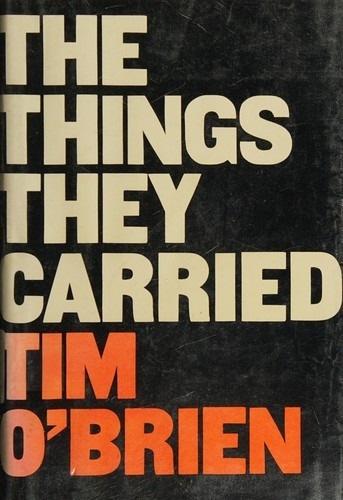
YES. The Things They Carried is one of the rare books that grows more honest the more often you read it, because it keeps telling you how it lies.
What worked on the first read
The opening story does what almost nothing else in war fiction does. It lists, with flat precision, what the men of Alpha Company carry through Vietnam: weapons and their weights, rations, radios, photographs, letters, charms, fear. Lieutenant Jimmy Cross carries letters from a girl named Martha at college back home, and a pebble she sent him, and he thinks about her when he should be thinking about his men. By the end of the story a soldier is dead and Cross has resolved to be a different kind of officer. The list form, which seems at first like an exercise, turns out to be a way of saying how heavy everything was.
On first read the book's pull is that cumulative weight. The stories are short, mostly linked through the same handful of soldiers, Kiowa, Rat Kiley, Norman Bowker, Mitchell Sanders, Azar, and they arrive one blow at a time. "On the Rainy River", in which the narrator, a young man named Tim O'Brien, drafted in 1968, drives north to the Canadian border and spends six days at a fishing lodge trying to decide whether to cross, is as tense as any thriller and lands harder than most. The whole book reads in two evenings, and you feel it physically.
What holds up on a second read
Everything, and the structure most of all. On a return you notice that the narrator shares the author's name but is not simply the author, and that the book has been warning you about this from the start. Stories are told, then retold from another angle. A death that seemed settled in one chapter returns in another with different details, a different emphasis, sometimes a different person at the centre. "How to Tell a True War Story" stops being a meditation in the middle of the book and becomes its instruction manual: a true war story, the narrator says in effect, may never have happened, and may be truer for it.
That changes what the book is about. On first read it is about Vietnam. On a second, it is about the work of carrying a war back home and making it tellable, to a daughter, to an audience, to yourself, and about the guilt of shaping it. The narrator's distinction between "story-truth" and "happening-truth" sounds like a slogan on first read. Second time through, it is the hinge of the whole collection.
The prose holds up as well. O'Brien writes in short, repeated, spoken sentences, often circling the same fact three or four times before letting it go. That rhythm is hypnotic on first read; on a second it reads like someone working up the nerve to say the thing.
The moment test
"The Man I Killed", and then "Good Form". In the first, the narrator stares at the body of a young Vietnamese soldier on a trail and imagines, in obsessive detail, the life the dead man might have led: his village, his studies, his fear of failing his family. It is one of the most painful chapters in the book. Later, "Good Form" quietly takes the ground away: the narrator tells you that he did not, in fact, kill the man, that he was present, and that this does not make him any less responsible. Then he offers yet another version.
On first read the reversal is disorienting, almost a betrayal. On a second, knowing it is coming, "The Man I Killed" reads entirely differently. The repetition, the imagined details, the inability to stop looking, all become the marks of a man composing guilt rather than reporting a fact, and the chapter grows more moving, not less, for being admittedly invented. This is the opposite of a twist that dies once known. It is a revelation that makes the earlier pages truer.
The shelf verdict
Keep, and keep it where you can reach it. The Things They Carried is short, endlessly revisitable and generous in a way war books rarely are. You can return to a single story, "On the Rainy River" or "How to Tell a True War Story" or the title piece, and find it has shifted under you. Read as a whole, it becomes clearer and stranger with every return.
YES. Every few years, and at least once in full.