Verdict: YES · 1997
The God of Small Things: a tragedy built to be read twice
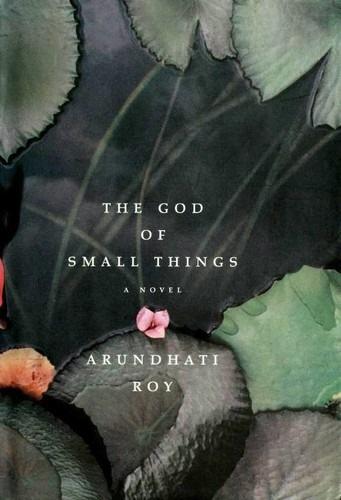
YES. The God of Small Things announces its central death in the first chapter and spends the rest of the book making you understand it, which means it was never relying on surprise in the first place. It reads better the second time because it was built to.
What worked on the first read
The first-read pull is the language. Roy writes Ayemenem, a town in Kerala, through the eyes of seven-year-old twins, Estha and Rahel, and she lets their way of hearing English reshape the prose. Words fuse into capitalised compounds, phrases get read backwards, adult sayings turn into private mottoes. On first read it is exhilarating and occasionally exhausting, like being let into a family's jokes before you know who is in the family.
The book runs on two clocks. In 1993, Rahel, now an adult, returns to the decaying family house, where Estha has been living in near-total silence. In 1969, over a few days, their cousin Sophie Mol arrives from England, the family pickle factory limps along, their mother Ammu is drawn to Velutha, a gifted carpenter from a caste the household treats as untouchable, and everything comes apart. Roy tells you early that Sophie Mol will drown. She does not tell you how, or what else the family lost with her, and that withholding is enough to pull you through on dread alone.
What holds up on a second read
Nearly everything, and more of it. Because the outcome is never the secret, a second pass loses no suspense; it only gains context. The book's method is to scatter fragments of the catastrophe across its early chapters, half-explained, and on first read they slide past as atmosphere. On a return they are the story. Phrases you took for childish wordplay turn out to be the twins repeating what adults said at the worst moment of their lives.
Roy's phrase for the rules the family breaks is the Love Laws, the ones that decide "who should be loved, and how. And how much." On first read it sounds like a flourish. On a second pass it reads as the book's whole argument, and you start noticing how many characters are enforcing those laws in small ways long before anyone breaks them in a large one. Baby Kochamma, the twins' great-aunt, is funny the first time, a vain and petty woman fixated on her television and her grievances. The second time she is frightening from her first scene.
The prose stamina holds too. The stylistic play that can feel showy on a first read becomes more moving once you know it is the voice of children who were about to stop being children. The adult chapters, written in a flatter register, read as what is left of that voice.
The moment test
The test case is the chapter at the police station, where Baby Kochamma persuades Estha to give the answer that condemns Velutha, who has already been beaten nearly to death in custody. On first read it is devastating mostly as plot: you finally learn what the twins did and why Estha stopped speaking. It is the scene the whole book has been circling.
On a second read it is worse, in the way great tragedy is worse. You now carry everything that led into that room: Estha's earlier humiliation at the cinema, which left him frightened of adults and eager to please; the way Baby Kochamma has been rehearsing her version of events for chapters; the tenderness Velutha has shown both children, which they could not protect. The single word Estha says lands not as a twist but as the inevitable sum of every small thing the book has shown you. Knowing it is coming makes each step toward it harder to read, and that is the sign of a scene that deepens rather than dissolves.
Roy then ends the novel not in 1993 but back in 1969, with Ammu and Velutha together by the river, on a word of hope, "Tomorrow." The first time it can feel like a strange final note. The second time, knowing exactly what tomorrow brought, it is the cruellest and most loving choice in the book.
The shelf verdict
Keep it, and keep it within reach. This is a novel whose first read is spent learning its language and its family, and whose second read is spent seeing what you were shown all along. The second is the better book. A third, years later, will likely find different sympathies: the adult Rahel's chapters read differently once you are closer to her age than to the twins'.
YES. Return to it every few years, and expect it to cost a little more each time.