Verdict: NO · 2019
The Silent Patient: one evening's twist, then nothing left to find
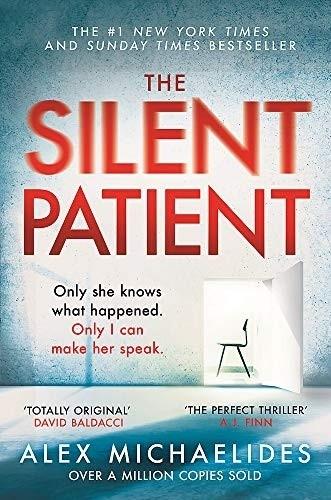
NO. The Silent Patient is built around a single reveal, and once that reveal is spent there is almost nothing left in the book to return to. Read it once. Don't reread it.
What worked on the first read
The premise is a strong hook, and Michaelides knows it. Alicia Berenson, a successful London painter, is found with her husband, who has been shot five times in the face, and she never speaks again. The only thing she produces afterwards is a self-portrait titled Alcestis, after the heroine of Euripides who dies in her husband's place and comes back from death unable, or unwilling, to speak. Years later, a psychotherapist named Theo Faber takes a job at the secure psychiatric unit where she is held, convinced that he can be the one to make her talk.
On first read, the alternating structure does its job. Theo's first-person account, with its staff politics and his troubled marriage, is cut against extracts from Alicia's diary from the weeks before the shooting. The chapters are short. Each ends with a small push. The prose is plain and quick, and the book is designed to be finished in one or two sittings. As a first read it delivers exactly what it promises: a question, a steady drip of suspects, and an answer most readers will not see coming.
What holds up on a second read
Very little, and the reason is structural. The novel's entire design is in service of one turn. Everything else, from the hospital staff to the side characters who drift through as possible culprits to the therapy sessions, exists to keep your attention moving while the trick is being set up. On a second read the trick is visible from the opening pages, and once you can see it, the scaffolding looks like scaffolding.
This is the key difference between a twist that rewards rereading and one that does not. In the best puzzle novels, knowing the answer lets you watch the author play fair: the clues were there, the misdirection was elegant, and the characters still make sense from both sides of the reveal. Here, the second pass mostly shows how much information was withheld rather than hidden in plain sight. Theo's voice, which reads as merely flat the first time, becomes flatter once you know why it has to be so careful.
The supporting cast does not deepen either. Alicia's diary entries carry the book's best moments of real dread, and they are still effective on a return, but the people around her remain functions: the resentful brother-in-law, the possessive gallerist, the cousin with a grudge. None of them gains dimension when you come back. They were never meant to.
The moment test
The test case is the moment the two timelines collapse into one. The reader learns that Theo's own story, his marriage and his wife Kathy's affair, took place years before the Alicia material, and that Theo is the masked intruder in Alicia's diary who was in her house the night everything happened. It is the book's single big effect, and the first time it lands with a real jolt.
On a second read you go looking for the joins. They are there, but they are thin. The book relies on the reader's default assumption that two narratives presented side by side are running in parallel, and on Theo leaving out things a real narrator in his position would think about constantly. Knowing the reveal, his early chapters read less like a double game and more like a careful dodge. There is no second layer under the first: no irony that blooms, no line that suddenly means something richer. The reveal does not get better once you know it. It just gets explained.
Compare that with the Alcestis painting, which is the book's most promising idea. A mute self-portrait as a message, a myth about a woman who returns from death and cannot speak: that alone could have carried a second reading. Instead it works mostly as a clue, and once the clue is solved it goes quiet too.
The shelf verdict
Donate it, or hand it to someone who has managed not to be spoiled. The Silent Patient is a good one-evening thriller with one honest surprise, and the first read is worth it for that surprise alone. It is not a cheat, and it is not a bad book. It is a book with exactly one thing to give, and it gives it the first time.
Five years from now, the premise and the turn will still be easy to recall in a sentence. That is a mark of a well-built hook. It is also the reason there is no need to go back.
NO. Read it once. Don't reread it.