Verdict: NO · 2015
The Girl on the Train: a fine commute, but only one way
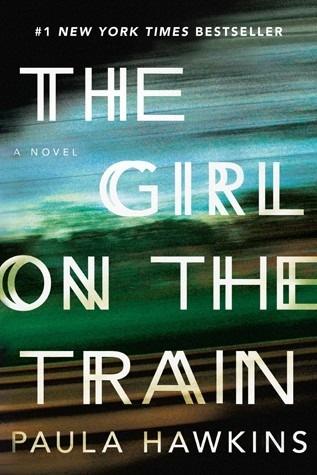
NO. The Girl on the Train is a well-oiled suspense machine whose one real secret lives in its narrator's missing memory, and once that memory is restored the book has nothing else to hand you. Read it once. Don't reread it.
What worked on the first read
The premise is the best thing Hawkins came up with, and it is very good. Rachel Watson rides the same commuter train into London every morning and back every evening. It stops at the same signal, beside the same row of houses, and from her window she has invented a life for the couple in one of them, complete with names and a happy marriage. A few doors down is the house she used to live in with her ex-husband Tom, who now lives there with his new wife, Anna, and their baby. Then the woman Rachel has been watching goes missing, and Rachel, who drinks heavily and loses whole evenings to blackouts, realises she was nearby on the night in question and cannot remember what she did.
On first read that is a superb engine. Rachel is not lying to you so much as unable to tell you, and her shame, her lists of small humiliations, and her habit of riding the train even after she has lost the job it once took her to give the book a texture of real misery that most domestic thrillers skip. The diary-style sections, stamped with dates and split into mornings and evenings, keep the pace brisk. The three narrators, Rachel, the missing woman Megan, and Anna, each think the others are the problem, and the book lets you take turns agreeing with all of them.
What collapses on a second read
The structure is clever exactly once. Megan's chapters run on an earlier clock than Rachel's and Anna's, closing the distance until the timelines meet on the night she disappears. The first time, that gap is a fuse. The second time, it is just a schedule, and you can feel the book counting down to the point where it is allowed to tell you things.
The deeper problem is that nearly every character exists to cast suspicion. Megan's husband, her therapist, the red-haired man Rachel half-remembers from the train: each is lit for a few chapters and then dimmed. On a return visit the rotation is obvious, and none of them gains anything when you already know they are not the answer. Anna, in particular, never becomes more than a point of view the plot needs at certain moments.
What does survive is Rachel's voice in its lowest stretches, the mornings after, the lies to her flatmate about where she goes all day. Those passages are honest about addiction in a way that still lands. But they are a small share of the book, and they are not why anyone picks it up.
The moment test
The test case is the night in the underpass, the memory Rachel keeps circling and that the whole novel is built to restore. When it finally returns, it reveals that Tom, not anyone she suspected, was the danger, and that for years he had been telling her she did things during her blackouts that she never did. On first read it is an effective double turn: the killer is unmasked, and the narrator's unreliability turns out to have been partly manufactured by the man who benefited from it.
On a second read that second idea is the most interesting thing in the book, and it is badly underused. Knowing Tom has been rewriting Rachel's past should make every early scene of him sound different, and a few do: his patient, weary phone calls read as management rather than concern. But Hawkins keeps him mostly offstage, so there is little to reread him through. The reveal lands as information rather than irony. The final confrontation in the house, which the first time is grimly satisfying, plays the second time like the last step of a procedure.
Megan's own disclosure, a loss from her past that she finally tells her therapist, is the one scene that holds its weight across readings, because it is about grief rather than suspense. It is also the scene the plot is least interested in.
The shelf verdict
Lend it to someone who has not read it and has somehow avoided the film. The first read is genuinely worth it: the premise is a clean, memorable idea, Rachel is a more painful and specific narrator than the genre usually allows, and the last hundred pages move fast. It is not a cheat. It plays fair with its gaps.
But a thriller earns a second read when knowing the answer opens a second book underneath the first, and here the answer closes it. Five years from now, the image of a woman watching a house from a stalled train will still be easy to recall. Everything that happens inside the house will be easy to recall too, which is the problem.
NO. Read it once. Don't reread it.