Verdict: NO · 2020
The Midnight Library: a kind book with nothing left on the shelf
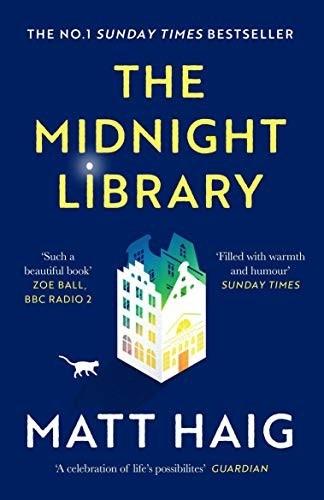
NO. The Midnight Library is a kind, quick book whose whole value is spent in the first read, because it has one idea and states it plainly from the start.
What worked on the first read
The premise is the pull, and it is a good one. Nora Seed, in her mid-thirties in an English town, has a run of losses in quick succession: her cat dies, she loses her job at a music shop, and her life feels like a long list of things she gave up. In despair she tries to end it. Between life and death she finds herself in a vast library, run by Mrs Elm, the librarian from her old school, where every book on the shelves is a version of her life in which she chose differently. She can open any of them and step into that life. If she finds one she truly wants, she can stay.
Everyone has a list of roads not taken, and the book gives you the pleasure of watching someone try them. Nora marries the man she left, runs the pub they once dreamed about, becomes a champion swimmer, a rock star, a glaciologist in the Arctic. Each life arrives as a short, brisk section with its own small surprise: the dream that turns out to be hollow, the success that costs someone else. The chapters are short and the prose is clear, warm, and conversational. It reads in an evening or two.
There is also something sincere in it. The book takes depression seriously and treats Nora with real gentleness. For a reader who meets it at a bad moment, that gentleness can matter, and it would be dishonest to wave that away.
What collapses on a second read
Almost everything, because there was never a second layer to find. On first read you are curious about each new life. On a return you know the pattern after the second or third: Nora imagines that a different choice would have made her happy, steps into it, and discovers that it did not, or not in the way she expected, or not without cost. The book repeats that beat across many lives, and the lesson is the same each time. Knowing it in advance turns the middle of the novel into a series of illustrations of a point already made.
The Book of Regrets, a heavy volume listing everything Nora wishes she had done differently, is a strong image on first read. On a second it reads as the thesis written down in advance. Mrs Elm explains the rules of the library, and later the meaning of the library, in plain terms, so the reader is never asked to work anything out. The alternate lives are sketched rather than inhabited. Characters in them exist to deliver a realisation and then step aside.
The prose, which is easy and pleasant the first time, has no stamina. There are few sentences you would want to hear again, and the frequent aphorisms about life and possibility, so consoling on first contact, flatten with repetition.
The moment test
Nora's life as a glaciologist, working on a research trip in Svalbard, where she comes face to face with a polar bear. It is the most vivid sequence in the book and the one where she first feels intensely alive: real fear, real cold, a life that wants her in it.
On first read it is a jolt of energy after a run of disappointing lives, and it is the scene most people remember. On a second read it is still the best-written stretch, but you know what it is for. The bear is there to prove a point about wanting to live, and the novel tells you so shortly afterwards. The scene gets slightly worse with foreknowledge, because the danger was the point and the danger is gone.
The ending is the clearest case. Nora eventually understands that the life she most wants is not one of the shiny alternatives but her own, the one she tried to leave, seen now with different eyes. It is a decent, humane ending and a predictable one; the book points toward it from the first chapters. On first read the relief carries it. On a second there is no tension left to release, and the final pages read as a summary of what the library was for.
The shelf verdict
Read it once, ideally at the moment it finds you. Don't reread it. If it helped, lend it to someone who might need the same evening of comfort; that is the use it was made for. Then pass it on rather than keep it.
NO. Once is enough.