Verdict: MAYBE · 2018
The Overstory: reread the roots, not the whole forest
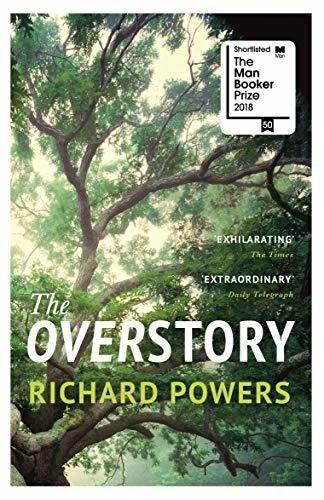
MAYBE. The Overstory opens with some of the best short fiction Richard Powers has written, then spends hundreds of pages turning those people into an argument, and the argument rereads less well than the people did.
What worked on the first read
The structure is bold, and on first read it is thrilling. The book is divided like a tree: Roots, Trunk, Crown and Seeds. Roots is a sequence of eight self-contained stories introducing nine people, each of whose lives turns on a particular tree. A family in Iowa photographs the same chestnut once a month for generations. A Chinese immigrant engineer plants a mulberry for his daughter. A boy falls from an oak and ends up in a wheelchair, building digital worlds. A young airman falls from a burning plane in Vietnam and is saved by a banyan. A shy, hearing-impaired botanist becomes convinced that trees communicate with each other and is laughed out of her field for saying so.
Each of these stories is complete in itself, and several would stand among the best stories in any collection. On first read, the pleasure is double: you get the story, and you get the anticipation of how these strangers will meet. The book has real urgency, too. Powers wants you to look at trees as living, slow, social beings, and for a good stretch he succeeds. Plenty of readers come out of it noticing the trees on their own street differently, which is not a small thing for a novel to do.
What holds up, and what thins, on a second read
Roots holds up completely. Knowing where each character ends up makes those opening stories sadder and sharper, and the chestnut story in particular, with its generations of photographs flipped through like a slow film, gets better once you know how long the book's view of time really is. The botanist, Patricia Westerford, is the novel's most durable creation: her decades of patient fieldwork, her isolation, and her late vindication give the book its emotional spine.
Trunk is where a second read gets harder. Several of the characters converge on the fight to save old-growth forests in the Pacific Northwest, and the book becomes a protest novel. On first read, the momentum of the campaign and the tree-sit high in an ancient redwood carry you. On a return, you notice how often characters speak in positions rather than voices, and how much of their dialogue exists to deliver information about forests that the narration has already given. The ideas are still serious. They are simply less surprising the second time, and a novel of ideas needs its people to carry them when the ideas are no longer new.
Crown and Seeds disperse the cast again, and the threads that follow the game designer and the couple in the suburbs read as thinner on a second pass than they did when you were waiting to see how they connected.
The moment test
The test case is the act of sabotage that ends the activist chapters, the night that leaves Olivia Vandergriff dead and scatters the others into silence and guilt. On first read it is shocking. Olivia, a college student who returned from a near-death experience believing she was being guided toward the trees, has been the group's conviction, and losing her that way is the book's hardest blow.
On a second read the scene is weaker, not stronger. Knowing it is coming, you watch the build-up and see how little room Powers gave Olivia to be anything but a believer. Her certainty, which reads as luminous the first time, reads on return as a device: she exists to be pure, and then to be sacrificed. The aftermath, especially Adam's long reckoning years later, recovers some ground, but the moment itself does not deepen. Compare that with Patricia's address near the end of the book, which is quieter and more ambiguous, and which gains weight once you know her whole life. That is where the novel's second read lives.
The shelf verdict
Keep it, but reread selectively. The Roots section is worth returning to on its own, almost as a story collection, and Patricia's chapters can be followed as a single thread through the rest. A full second read of the whole novel is a heavier commitment than it repays right now, though its ideas about time may land differently in ten years.
MAYBE. Reread the roots soon. Save the whole forest for later.