Verdict: MAYBE · 2013
The Goldfinch: a great middle in a book too heavy to carry twice
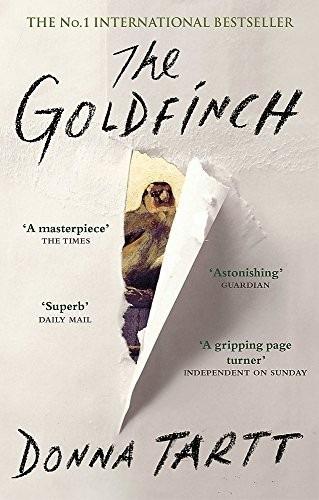
MAYBE. The Goldfinch contains one of the best long sections in recent American fiction, and it is buried inside a novel that asks for more patience on a second visit than it repays.
What worked on the first read
The pull is real, and it starts fast. A thirteen-year-old boy, Theo Decker, is in the Metropolitan Museum with his mother when a bomb goes off, and he walks out of the rubble carrying a small Dutch painting of a chained bird. Tartt makes that act, half dazed and half instinctive, the engine for nearly eight hundred pages. On first read you want to know what will happen to the painting, and Tartt is very good at keeping that question alive while appearing to ignore it.
The first New York section, with the Barbour family's Park Avenue apartment and Hobie's workshop downtown, is thick with texture: wood and varnish, the hush of old rooms, an orphaned boy handed between strangers who are each a different kind of kind. Then the book moves to Las Vegas, to a half-empty subdivision at the edge of the desert, to Theo's unreliable father, and to Boris. This is where the novel catches fire. Boris is the best character Tartt has written, a funny, reckless, generous boy who talks in a scrambled mix of languages and is the only person who sees Theo clearly. The Vegas chapters have a looseness and an ache the rest of the book cannot quite reproduce.
What holds up on a second read
The parts hold up better than the whole. Coming back, the Vegas section is even better than remembered, because you can watch Tartt build Boris out of tossed-off details that pay off hundreds of pages later. Hobie's workshop improves as well. The long passages about restoring antique furniture turn out to be the book's real argument about what it means to keep a damaged thing alive, and about the thin line between restoration and fraud.
What does not hold up is the frame of suspense around the painting. On first read, the question of where the goldfinch is carries you through the slower adult New York chapters. On a second read you already know, and those chapters have to stand on their own. Some do. Much of Theo's numbed adulthood, his engagement and his shady dealings in the shop reads as connective tissue, and it is very long tissue.
The ending is the bigger problem for a reread. The final stretch turns into a crime story abroad and then gives way to pages of reflection on art, fate and meaning. The first time, that closing meditation feels like the reward for having come so far. The second time, it reads as the novel explaining itself, at length, after it has already shown you everything it means.
The moment test
The best test is the season in Las Vegas when Theo and Boris, both effectively unparented, are left to themselves in the empty houses of the development, living on junk food and whatever they can lift from stores, drinking and talking through the night. It is not a single scene so much as a weather system, and it is the emotional centre of the book.
It gets better on a return. Knowing who Boris becomes gives these chapters a double exposure: you see the boy and the man at once. The jokes are still funny, but every act of loyalty now looks like a promise the book will eventually call in. These are the pages worth marking and coming back to without reading the rest.
The test fails in the other direction for the museum scene that opens the book. Its force on first read comes from disorientation. You are inside Theo's confusion, not fully understanding what he is carrying or why. On a second read the scene is still vivid, but the disorientation is gone, and what remains is careful staging. You admire it. You do not feel it the same way.
That split is the whole verdict in miniature. The parts of The Goldfinch that are about people deepen when you return. The parts that are about withholding information, the slow management of the painting's whereabouts and the long approach to the finale, have nothing left to give once the information is yours.
The shelf verdict
Lend it, and leave a bookmark at Vegas. The Goldfinch is a novel worth reading once in full, and its middle is worth rereading on its own. As a complete second read, though, it asks for weeks of attention and returns a handful of great chapters wrapped in a great deal of drift. Tartt's sentences have the stamina for a return; the structure does not.
There is also a mood question. On a long winter stretch with nothing else pressing, the full book might be exactly right again. On any ordinary month, the desert chapters are the visit worth making.
MAYBE. Return in a few years, and go straight to the desert.