Verdict: MAYBE · 2018
Normal People: a perfect read at twenty, a slower one after
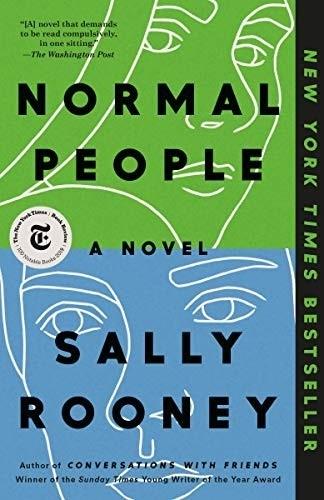
MAYBE. Normal People is a sharp book that depends heavily on not knowing what happens next, and on being roughly the age of its characters when you read it.
What worked on the first read
The pull is the simplest kind there is. Two people, Connell Waldron and Marianne Sheridan, keep coming together and falling apart over about four years, first at school in a small town in the west of Ireland and then at Trinity College in Dublin. Connell is popular at school and anxious about it. Marianne is clever, isolated and openly contemptuous of everyone around her. Connell's mother, Lorraine, cleans the Sheridans' house. That one fact sets up the whole book: they are attracted to each other from the start, and money sits between them from the start.
Rooney writes dialogue without quotation marks, in plain declarative sentences that rarely reach for a metaphor. On first read the effect is close to eavesdropping. You see the misreadings coming a beat before the characters do, and the tension comes from watching two intelligent people fail, again and again, to say a simple true thing out loud. The chapters are headed with dates and gaps of time, a few weeks or several months later. Each jump lands you in a new arrangement and makes you work out what has changed, and that is the momentum. It goes quickly, and on first read it rarely wastes a page.
What holds up on a second read
The prose holds up better than I expected. Spare writing usually loses force on a return because there is nothing to linger on, but Rooney's sentences are exact about small social pressures: who pays, who is invited, who is embarrassed to be seen with whom. On a second pass the class thread stands out much more clearly. Connell's sense of being a guest in the world Marianne grew up in, and later in the world of Trinity, explains more of his silences than the love story does. That layer is easy to miss the first time, when you are mainly reading to find out whether they will end up together.
What wears thin is the engine. A lot of the plot depends on one of them not saying something, or the other misreading it, and once you know where each misunderstanding leads, the near-misses feel more arranged than inevitable. The time jumps that felt bracing the first time now read partly as a way of skipping the conversations that would have settled things. The darker material, Marianne's family and the violence of her brother Alan, and Connell's depression in his later university years, still lands. But it is carried by the same flat register as everything else, and on a reread that evenness can feel less like restraint and more like a limit.
There is also the question of when you read it. At twenty-one, the book feels like an account of your own life written down by someone who noticed everything. Some years later it reads as accurate but smaller: a good novel about a particular, intense stretch of early adulthood rather than a book you grow into.
The moment test
A summer in Dublin, during their time at Trinity. Connell's work dries up and he can no longer afford his rent. He means to ask Marianne whether he can stay with her, cannot bring himself to say it directly, and instead says he will probably have to move home. She hears it as him ending things. Neither corrects the other, and they separate for months.
On first read this scene is agonising in the right way. You can see both of them getting it wrong and you want to shout. On a second read it is still well observed, and it says something true: Connell's shame about money is so deep that he would rather lose her than ask. But knowing it is coming exposes the mechanism. The scene does its job, and the job is to push the plot apart so the next section can begin. You admire it and feel slightly handled at the same time. That is the MAYBE in a single scene. The insight survives; the suspense it was built to produce does not.
The final chapter, by contrast, improves on a return. Knowing how it ends, you notice how carefully the book has prepared for that open, unresolved last exchange, and how little it needs to say.
The shelf verdict
Lend it. Normal People is best handed to someone who is at the age it describes, or nearly there, and then quietly asked for later. It is a well-made novel with a few scenes that stay with you, and its account of class and shame between two people who love each other is more precise than its reputation as a love story suggests.
But it was built for one read, and it gives most of what it has the first time. If I return, it will be for the chapters at Trinity and the last one, not for the whole book from the start.
MAYBE. Once a decade, to see how differently it reads from further away.