Verdict: YES · 1967
One Hundred Years of Solitude: the family tree finally makes sense
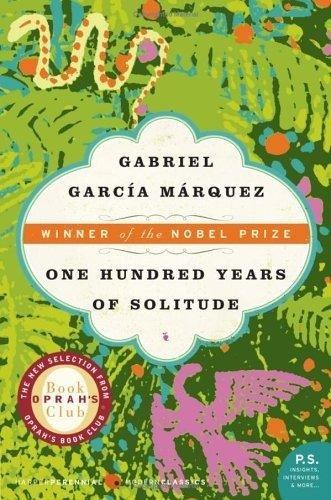
YES. One Hundred Years of Solitude is a novel about a family that keeps repeating itself, and it only reveals how deliberately it was built once you repeat it yourself.
What worked on the first read
The opening sentence does more work than most whole chapters. Gregory Rabassa's translation begins with Colonel Aureliano Buendía, years later, facing a firing squad and remembering the afternoon his father took him "to discover ice." In one line the book shows you its method: a future already decided, a past remembered from inside it, and a marvel treated as an ordinary errand.
On first read the pull is wonder. The founding of Macondo by José Arcadio Buendía and Úrsula, the gypsies led by Melquíades who bring magnets and telescopes, an insomnia plague that makes the town forget the names of things, a rain of tiny yellow flowers, a young woman who rises into the sky while folding sheets. García Márquez reports all of it in the same level, unhurried voice he uses for weddings and wars, and that evenness is what makes the strangeness feel like history rather than fantasy.
The honest difficulty is the names. Over seven generations the Buendías hand down the same few, José Arcadio and Aureliano above all, and on a first read it is easy to lose track of which is which by the middle of the book. Many editions print a family tree at the front for good reason. Some first readers push through on momentum and atmosphere alone, and that is a perfectly good way to read it once.
What holds up on a second read
The names are the second read's reward. Úrsula, who lives long enough to see most of the family, notices that the Aurelianos tend to be withdrawn and clever and the José Arcadios impulsive and strong, and that time in the house seems to be going in a circle. On first read that sounds like an old woman's observation. On a second pass you can follow it yourself, and the novel turns from a parade of incidents into a pattern: the same appetites, the same solitudes, the same mistakes, each generation slightly more worn.
Knowing the arc also changes the book's political chapters. The arrival of the banana company, the strike, and the massacre that the town is then told never happened read on first pass as one more extraordinary episode. On a second read they sit at the hinge of the whole structure, the moment Macondo's private repetitions collide with history it cannot absorb, followed by a rain that lasts four years, eleven months and two days. The comedy of the early chapters reads differently, too, once you know how much will be forgotten.
The prose stamina is remarkable. The long, rolling paragraphs that can feel dense on first read are easier to enjoy when you are not anxious about keeping up, and the jokes, of which there are many, land more often once you know who everyone is.
The moment test
The test case is the last chapter, where the final Aureliano finally deciphers the parchments Melquíades left behind generations earlier, and finds that they are the family's history written in advance, ending at the moment he is reading it. On first read it is a breathtaking close, a sudden realisation that the book you are holding and the book in his hands are the same.
On a second read it is even better, because you can now see how often the parchments appear along the way: characters return to Melquíades's room, try to read them, fail, and leave. The prophecy was in the house the whole time, ignored by every generation that might have broken the cycle. The ending stops being a trick and becomes a judgment. And the opening line, with its "many years later," reads as the first hint that the story was always being told from its end.
The shelf verdict
Keep it, and keep the edition with the family tree. The first read is worth it for the wonder alone, but the book does not fully open until you return knowing its shape. A second read in your twenties and a third in your forties will likely find different centres: the young lovers and soldiers first, Úrsula and the long work of holding a household together later.
YES. Come back once a decade, and expect to find the house a little more crowded each time.