Verdict: MAYBE · 1951
The Catcher in the Rye: louder at sixteen, sadder at forty
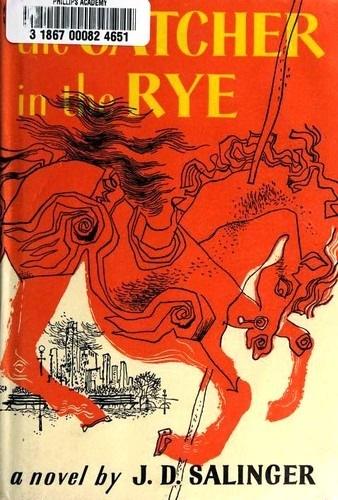
MAYBE. The Catcher in the Rye is a different book every time you read it, but not always a better one, and the stretches that thrilled you at sixteen are the stretches you skim at forty.
What worked on the first read
The voice, entirely. Holden Caulfield, sixteen and just expelled from Pencey Prep, tells the story of the few days before Christmas when he leaves school early and drifts around New York rather than go home and face his parents. He talks to the reader the way a clever, hurt teenager talks to a friend he is trying to impress: sarcastic, repetitive, funny, and certain that nearly every adult is a phony. On a first read, especially a young one, it feels like being let in on something. Nobody in a book had talked like that before, or that is how it feels.
The episodes are loose and vivid. His roommate Stradlater borrows his jacket and goes on a date with Jane Gallagher, a girl Holden cares about and cannot bring himself to call. He checks into a seedy hotel, goes to bars where he is obviously underage, has a disastrous encounter arranged by the elevator man, takes an old girlfriend ice skating and then insults her. He keeps asking people where the ducks in the Central Park lagoon go when the water freezes. None of it adds up to a plot, and on first read it does not need to. The voice is the plot.
What holds up, and what doesn't, on a second read
What holds up is the grief. On a return you notice how often Holden circles back to his younger brother Allie, who died of leukaemia, and to the baseball mitt Allie covered with poems in green ink. Allie is mentioned early and lightly, and on first read it can pass as one detail among many. On a second read it is the centre of the book. Holden is not mainly angry; he is mourning, and nobody around him has noticed.
His sister Phoebe also gets better on a reread. The chapters where Holden sneaks home at night to see her are the warmest in the novel, and she is the one person who sees through him. When she asks him to name one thing he actually likes, and he cannot really answer, the scene is funny on first read and painful on the second.
What does not hold up as well is the middle. The hotel, the bars, the long run of encounters with people Holden despises: on a return these feel less like revelation and more like a mood you have outgrown. The repetitions that read as authentic at sixteen, the constant tics and the constant verdicts on phonies, start to grate once you are no longer on his side by default. You have probably met Holden since. You may have been him. That makes him easier to understand and harder to listen to for two hundred pages.
The book is also short and plain enough that there is no hidden architecture waiting to reward a reread. What changes is the reader, not the text.
The moment test
The title scene. Phoebe asks Holden what he wants to do with his life, and he tells her about an image he has in his head: thousands of children playing in a field of rye near the edge of a cliff, and himself standing there to catch anyone who runs too close. He has taken it from the Robert Burns song, and Phoebe points out that he has the words wrong. The line is about meeting a body coming through the rye, not catching one.
On first read this is the book's big idea, delivered almost as a confession. On a second read the correction is what lands. Holden has built his whole self-image on a misheard lyric, and his little sister is the one who notices. Knowing what is coming, the scene stops being a statement of purpose and becomes a picture of a boy who wants to stop time because time already took his brother.
The ending, when Holden watches Phoebe ride the carousel in Central Park in the rain and does not try to stop her reaching for the gold ring, plays as quiet on first read. On a second it is the one moment he lets a child take a risk, and it is the closest the book comes to recovery. That scene earns a return visit. Several of the chapters before it do not. The last page, with its advice never to tell anybody anything, because "you start missing everybody", reads lighter at sixteen and heavier every time after.
The shelf verdict
Keep, but on a high shelf. Lend it to anyone who is sixteen. Reread the Allie and Phoebe chapters whenever you like; reread the whole thing once more in middle age, to find out which character you have become.
MAYBE. Once more, in your forties.